Post by
  August 25, 2026 |

This article is about one specific, tractable problem: you have organizational knowledge scattered across documents, wikis, runbooks, and people’s heads, and you need to consolidate it into a form that both your team and any AI system you adopt can actually use. The mechanics are straightforward. The organizational discipline required to get there is not.
The risk of getting this wrong is not that your AI tools will fail silently. The risk is that they will fail confidently. An AI system does not pause when it finds two contradictory documents describing the same deployment process. It picks one, answers the question, and moves on. Nobody in the conversation knows a choice was made.
What a single source of truth actually means (Structuring Context)
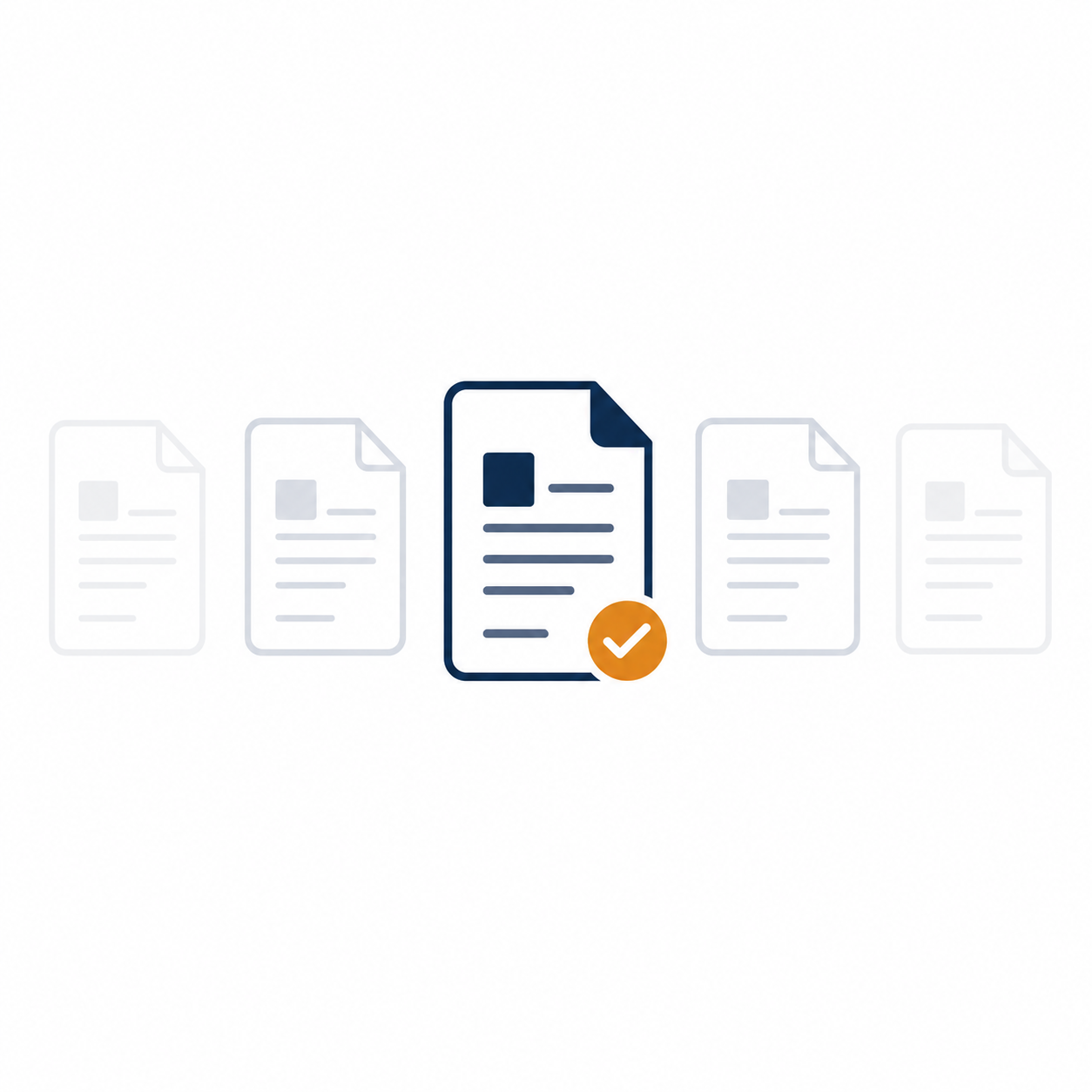
A single source of truth is not a single document. It is a policy: for any given piece of organizational knowledge, exactly one version is canonical, and every other version is either retired or clearly labeled as historical. The canonical version is the one that gets updated when something changes. Everything else is read-only context or archived.
This matters differently for AI than it does for human readers. A person skimming two conflicting runbooks will often notice the contradiction, cross-reference dates, and ask a colleague. An AI system reading the same two documents during retrieval will produce an answer that reflects whichever document scored higher on whatever relevance metric the system is using. The contradiction is invisible to the person who asked the question.
The foundation covered in the broader “Organizational Context for AI: The Complete Guide” is worth reading before you start restructuring documents. The principles of what context AI needs and why are a prerequisite to making good structural decisions here.
Four properties your canonical documents need
Getting to a trustworthy knowledge base means engineering four things into your documentation system, not just your documents.
Consistent naming
If your infrastructure team calls a component the “ingestion service”, your product team calls it the “data pipeline”, and your runbooks call it “pipeline-v2”, a retrieval system has no reliable way to know these are the same thing. You do not need to rename everything immediately, but you do need a controlled vocabulary: a list of canonical terms, what they refer to, and what deprecated names they replace. This is not overhead. It is the index that makes retrieval coherent.
Sensible chunking
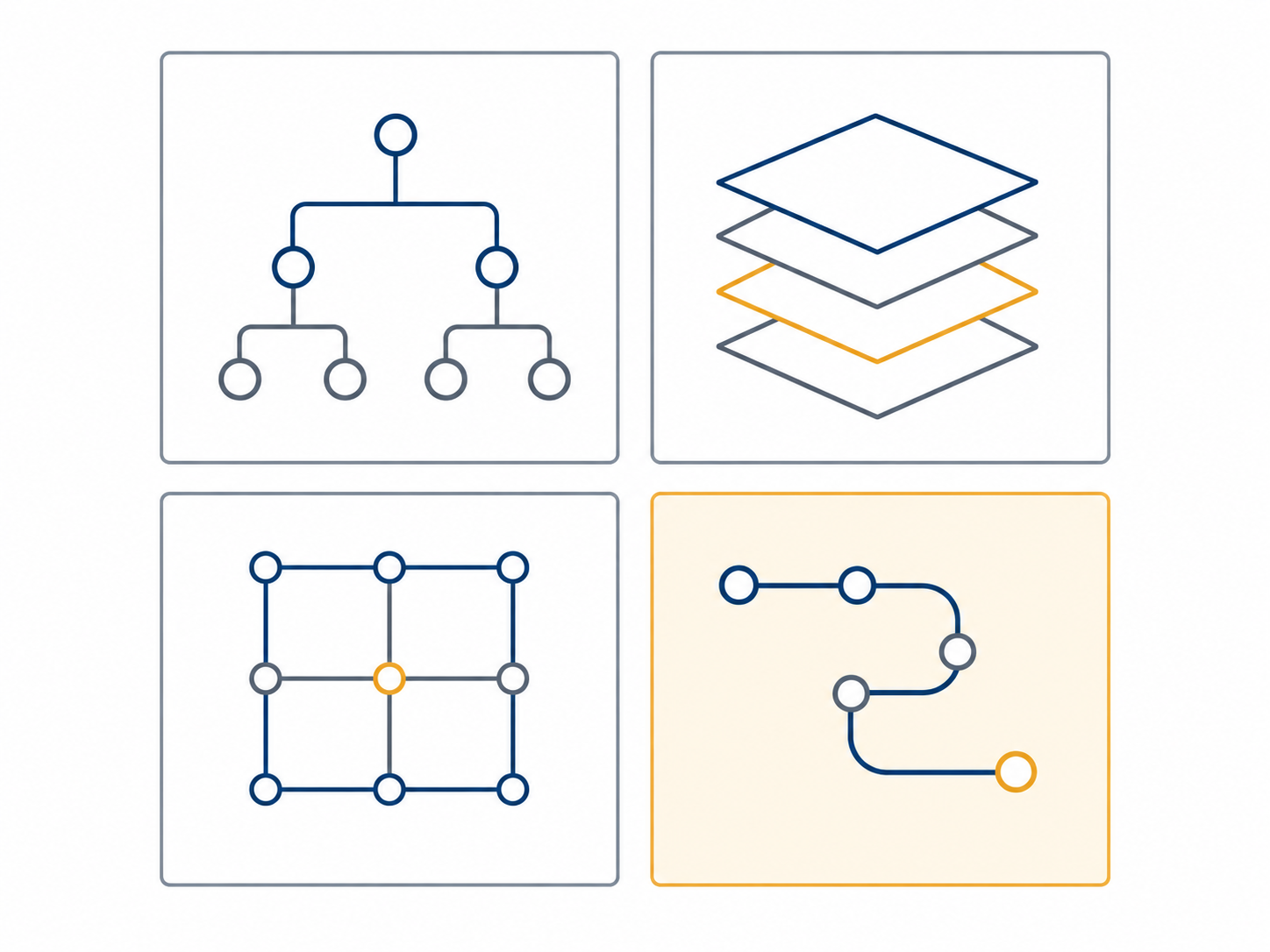
A 40-page architecture document is not one piece of knowledge. It contains dozens of discrete facts, decisions, and procedures that will be retrieved independently. How you split that document into retrievable chunks determines whether a query about your database failover process returns the right three paragraphs or an unhelpful wall of unrelated text. The practical rule: each chunk should answer one coherent question. It should have enough surrounding context to be understood without reading the full document, but not so much that it drowns the relevant content.
Chunking is also where many teams discover that their documents were never written with a single audience or single question in mind. A document that tries to be a tutorial, a reference, and a decision log at the same time chunks badly. Separating those concerns at the writing stage pays off when you move to retrieval.
Machine-readable form
Structured markup, consistent heading hierarchies, and predictable metadata fields are not formatting preferences. They are the difference between a document a system can parse reliably and one it has to guess at. If your documents use headings inconsistently, embed critical information in image captions, or store key decisions in comments inside proprietary file formats, a retrieval pipeline will miss or misweight that content.
The minimum viable standard is simpler than most teams expect: a consistent heading structure, metadata fields for owner, date, and status, and plain text or a widely supported markup format as the source. PDFs as canonical documents cause problems. Slide decks as canonical documents cause problems. Neither is a format that retrieval systems handle gracefully.
Provenance
Every answer an AI system generates should be traceable to a source document, and that source document should have enough metadata to tell you whether to trust it. Provenance means recording who wrote it, when it was last reviewed, who owns it, and what version of the system or process it describes. Without provenance, you cannot audit an AI-generated answer. You cannot tell whether it is based on your current production architecture or a design doc from eighteen months ago.
Provenance also enables a governance practice that is easy to skip: scheduled review. A document without a review date and an owner will drift out of date. When it does, the AI system using it will not know. Your team might not either.
Marking canonical versions and retiring the rest
The hardest part of building a single source of truth is not the canonical documents. It is the non-canonical ones. Wikis accumulate. Shared drives accumulate. Old Confluence spaces do not get deleted because someone might need them someday. The result is that your retrieval system indexes everything, including the outdated version of your deployment process from before you migrated cloud providers.
A practical approach has two steps. First, mark canonical documents explicitly in their metadata: a status field set to “canonical” or “current”, and a field pointing to the canonical document for anything you cannot immediately delete. Second, exclude non-canonical content from AI retrieval by default. Archived documents can stay in your storage system for human reference without being indexed for AI use. That boundary is meaningful and worth enforcing deliberately.
Some documents cannot be cleanly retired because they contain partial information that is still accurate mixed with information that is not. Those documents need to be split, updated, and re-canonicalized rather than left in a gray zone. A document labeled “mostly current” is not a safe knowledge base entry.
What goes wrong: specific failure modes in context structuring
These are not hypothetical. They are patterns that appear whenever teams move toward AI-assisted operations without first auditing their documentation.
The confident wrong answer
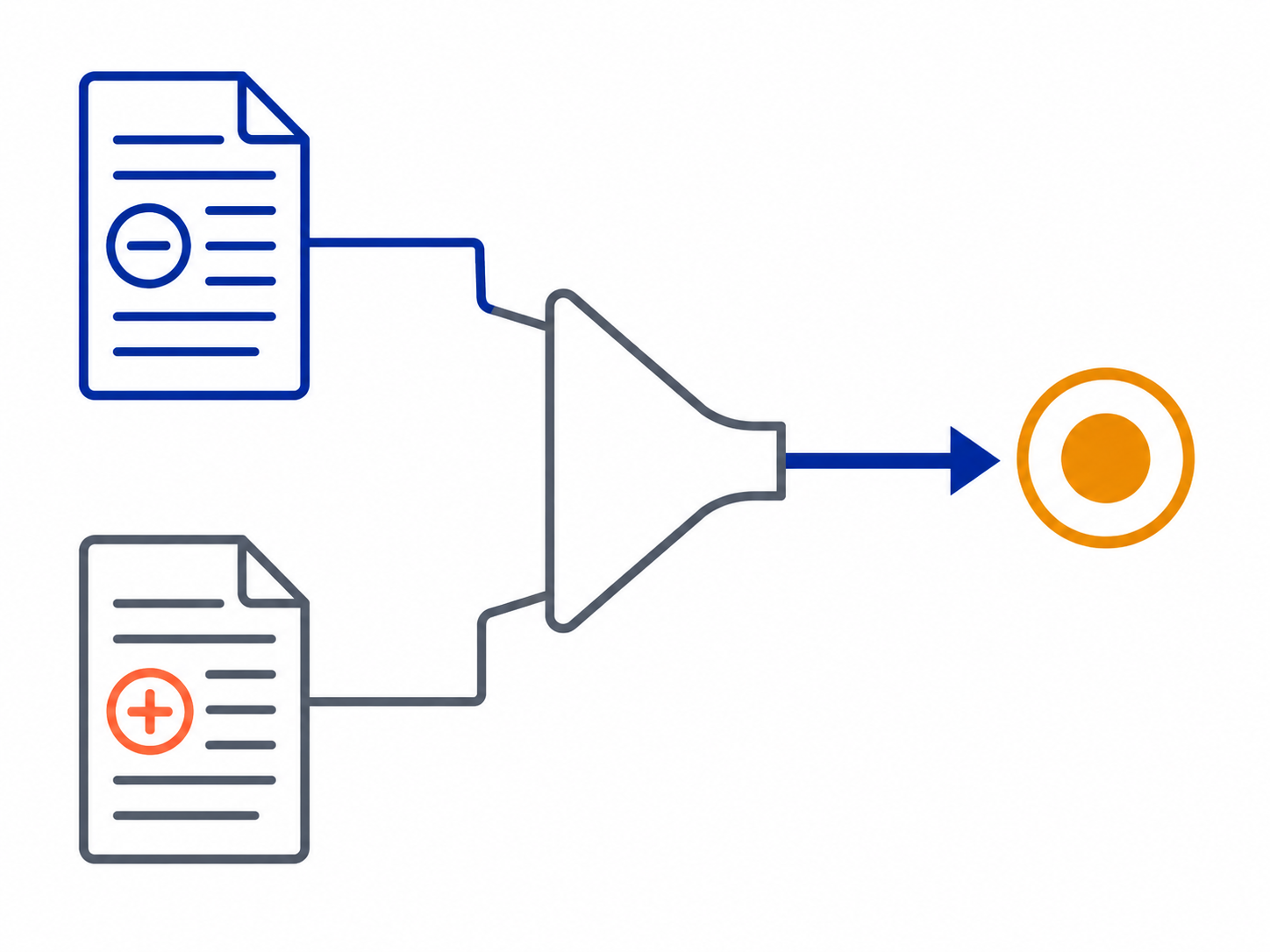
An engineer asks an AI assistant how to rotate credentials for a service. The system retrieves two documents: the current procedure and a draft from eight months ago that describes a rotation process for a dependency that has since been replaced. The answer it generates is a blend of both. It is stated with no uncertainty. The engineer follows it. The rotation fails, or worse, partially succeeds in a way that creates a security gap.
This failure mode is directly caused by leaving contradictory documents in the retrieval index. The fix is not a smarter AI system. The fix is retiring the old document before it gets indexed.
The terminology collision
Two teams use the same term to mean different things. “Environment” means the runtime environment to the infrastructure team and the client deployment environment to the customer success team. An AI system asked about environment configuration returns content from both contexts in the same answer. Neither team’s information is wrong. The collision is invisible until an action is taken based on the mixed answer.
The missing chunk boundary
A long architecture document is ingested as a single block because nobody defined chunk boundaries. A query about a specific subsystem retrieves the entire document. The relevant content is buried in the middle. The AI system either summarizes the whole thing poorly or anchors on the first and last sections, which happen to be about a different subsystem. The answer is plausible and wrong.
The orphaned update
An engineer updates the canonical runbook after a system change but does not update the summary document that links to it or the onboarding guide that copies the relevant section. Three weeks later, the onboarding guide and the summary are still indexed with the old procedure. New team members and AI queries against those documents get stale information. The canonical document is correct. The copies are not. Nobody knows the copies exist.
The operational fix is a policy against copying content across documents. Reference it. Link to it. Do not reproduce it. Every copy is a future inconsistency.
Building toward trust, not just completeness
A large, complete knowledge base that has not been canonicalized is not an asset for AI adoption. It is a liability. Volume is not the goal. Trustworthiness is. A smaller set of well-structured, clearly owned, consistently formatted documents that a system can retrieve and trace is worth more than a comprehensive archive of documents in various states of accuracy.
The practical sequence most teams find workable: audit what exists and categorize it as canonical, draft, historical, or unclear. Retire or archive everything in the last two categories. Bring drafts to resolution. Apply consistent metadata and formatting to what remains canonical. Only then bring it into a retrieval pipeline.
This is not a one-time project. It is an ongoing discipline. Knowledge bases drift. Systems change. Teams grow. The governance layer, which means ownership, review schedules, and a clear process for deprecating old content, is what keeps the single source of truth from becoming a well-labeled pile of gradually incorrect documents.