Post by
  August 25, 2026 |

Context for AI is not a one-time deliverable. It is a living asset, and like any asset, it depreciates. This article covers the operational disciplines that keep organizational context accurate after the initial build: ownership models that put a named person responsible for each area, decay signals and review cadences that surface stale knowledge before it causes damage, and measurement approaches that tell you whether your context is actually getting better or just growing larger.
The failure mode this article is written to prevent is quiet rot. Teams invest real effort in assembling context, use it to ground AI outputs for a few months, and then watch the underlying knowledge drift while the AI continues to speak with the same confidence it had on day one. Stale context is dangerous precisely because it does not announce itself. A well-structured, confidently stated answer built on outdated information reads exactly like a correct one.
Why Context Decays
Knowledge goes stale for ordinary reasons: teams change, systems change, decisions get revisited, and the written record lags behind reality. The gap between what is documented and what is true is not unusual in engineering organizations. What makes it dangerous in an AI context is that the system has no mechanism for doubt. It draws on what is present in its context and produces an answer. It does not flag that the architecture diagram it is referencing was last updated before a major refactor.
Decay accelerates in specific conditions. Rapid team growth means new contributors who do not know what already exists. Acquisitions or restructuring shift who owns what without updating the written record. Incident-driven engineering produces quick fixes that never get documented. Each of these is normal. The problem is assuming that context, once created, stays correct without any maintenance investment.
Ownership: The Prerequisite for Everything Else
Ownership is the single most important structural decision in a context maintenance program. Without a named owner for each area of context, review cycles do not happen, contradictions accumulate, and no one is accountable when outputs go wrong. Shared ownership, in practice, means no ownership.
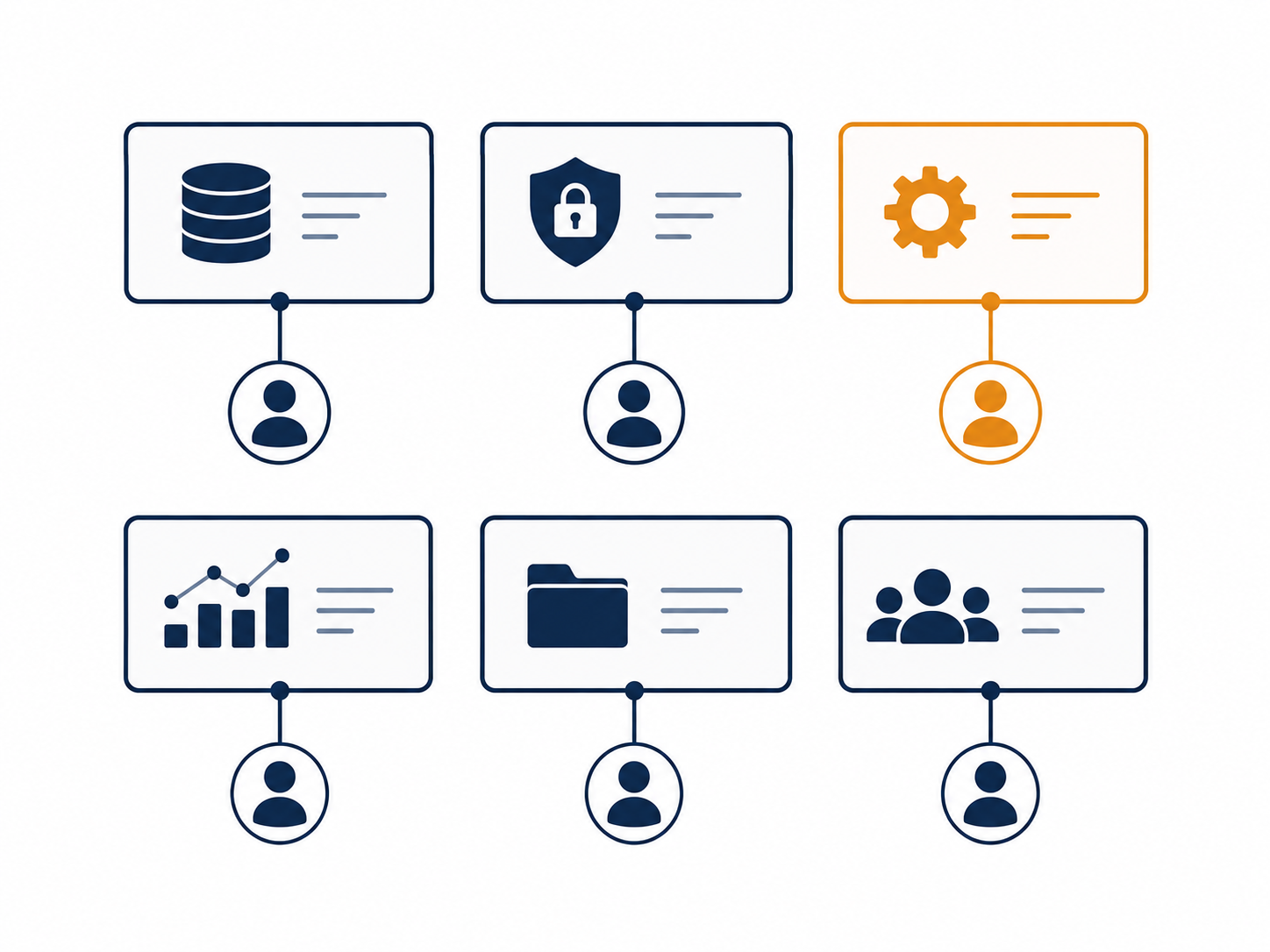
The ownership model does not need to be complicated. Map your context to the areas of the organization it describes: architecture, security posture, product decisions, operational runbooks, compliance requirements. Assign one person to each area. That person is not necessarily the one who writes the content, but they are the one who ensures it is current, who reviews changes, and who is contacted when accuracy is questioned.
What Owners Are Actually Responsible For
Being a context owner is a defined operational responsibility, not a title. Owners should be expected to review their area on a regular cadence, flag when a change in their domain has not yet been reflected in the documented context, and resolve conflicts when two sources disagree.
- Review the assigned context area at least once per quarter, more frequently for areas that change often.
- When a significant decision or change is made in their domain, update the relevant context before it is consumed by any AI workflow.
- Resolve contradictions: if two documents describe the same system differently, the owner reconciles them and removes the outdated version.
- Respond to escalations when an AI output is questioned and the source context is in their area.
This is a real workload. Budget for it explicitly or it will not happen. The typical mistake is assigning ownership on paper with no corresponding time allocation, then being surprised when the reviews do not occur.
Decay Signals and Review Cadence
You need two types of signals: those you engineer proactively and those that surface organically from use. Proactive signals are the easiest to build. Every piece of context should carry a metadata timestamp indicating when it was last verified, not just when it was created. A document that has not been reviewed in six months should be automatically flagged as potentially stale, regardless of whether anyone has reported a problem with it.
Organic signals come from operations. When an AI output is questioned by a team member who knows the domain better, that is a signal. When a workflow produces a recommendation that conflicts with a recent decision that the team knows about but is not yet documented, that is a signal. Build a lightweight process for capturing these events and routing them back to the relevant owner. An error log for context is not a sophisticated tool requirement. It can start as a shared document or a channel in your communication platform.
Setting Cadence by Area Volatility
Not all context ages at the same rate. A documented compliance requirement changes less frequently than an active service’s deployment architecture. Review cadence should reflect volatility, not be applied uniformly.
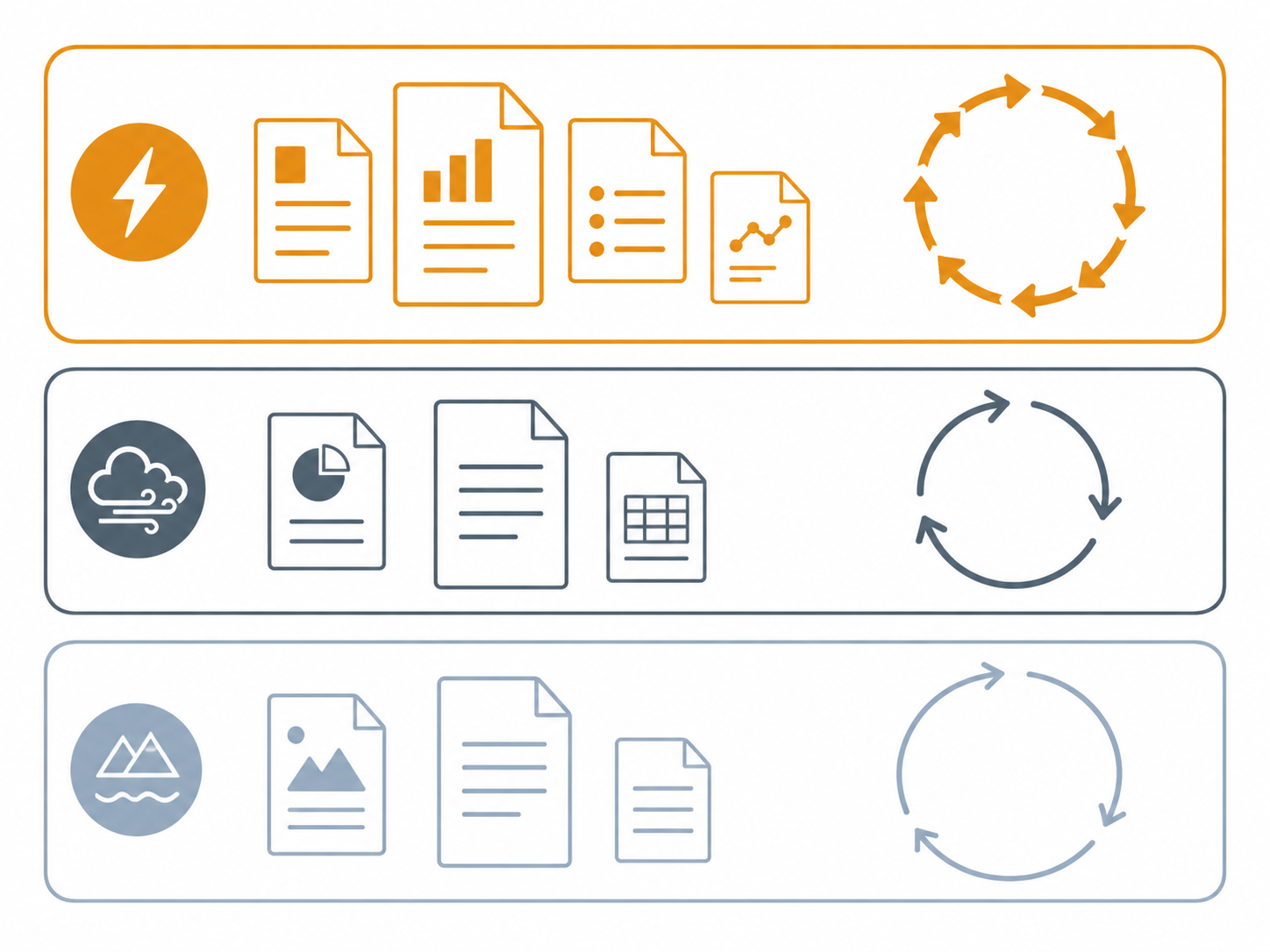
- High-volatility areas (active infrastructure, deployment processes, current team structure): review monthly or after every significant change.
- Medium-volatility areas (product decisions, integration specifications, security policies): review quarterly.
- Low-volatility areas (foundational architecture principles, compliance frameworks, historical decisions with documented rationale): review semi-annually.
These are starting points, not permanent settings. If a low-volatility area starts changing frequently due to a product shift or regulatory update, move it up the cadence ladder. The categories should reflect reality, not wishful thinking.
Anti-Patterns That Break Context Programs
Several failure modes appear reliably across organizations that attempt to manage context without enough structural discipline. These are worth naming directly because they are common and because they tend to be invisible until the damage has already been done.
The Single Unstructured Bucket
Dumping all documentation into one shared repository without structure, ownership, or categorization is the most common failure. It feels productive during the creation phase. By the time the context is in active use, the repository contains contradictory versions of the same system description, outdated runbooks sitting next to current ones, and notes from projects that were cancelled. The AI has no way to prefer one over another. It draws from all of it.
Contradictory Sources Left in Place
When a system is updated and new documentation is written, the old documentation needs to be removed or explicitly marked as superseded. This almost never happens consistently without a formal process. The result is that two documents describe the same component differently. In human use, someone with domain knowledge will usually know which one is current. An AI system consuming both has no such judgment. It may synthesize an answer that blends both, or surface whichever happens to be retrieved first.
No Owner on Anything
This is the organizational version of the stale context problem. It is common in teams that built context collaboratively and assumed collective ownership would persist. Collective ownership means that everyone assumes someone else is watching it. After six months, nothing has been reviewed, nothing has been updated, and the team is still trusting the output.
Over-Trusting Output Because It Sounds Authoritative
This is the failure mode that organizational context for AI exists to prevent, and it still happens even with context in place when that context is stale. A confident, well-structured AI response is perceptually indistinguishable from an accurate one. Teams that do not maintain a practice of spot-checking outputs against source context, especially for high-stakes decisions, will eventually act on something that is wrong. The risk is proportional to how much the context has drifted from reality.
Measuring Whether Context Quality Is Actually Improving
Measurement is where many context programs have a blind spot. Teams track the volume of documented content, the number of sources ingested, or the coverage percentage of systems described. None of these directly measures quality or accuracy. More context is not better context. More context with no governance is just a larger surface area for stale information.
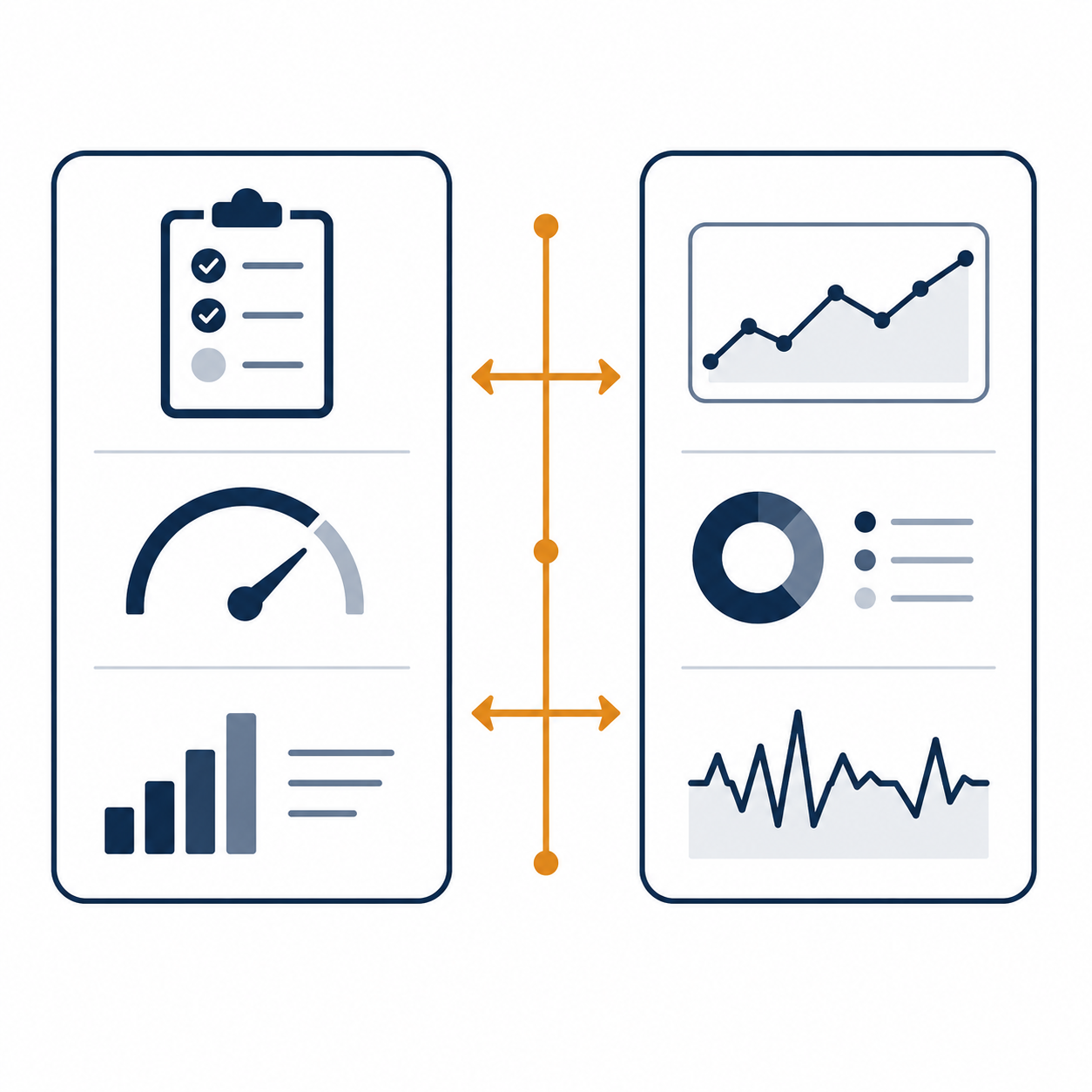
The metrics worth tracking fall into two categories: process metrics that confirm the maintenance loop is functioning, and quality metrics that reflect whether AI outputs are improving as a result.
Process Metrics
- Percentage of context areas with a named, active owner.
- Percentage of context reviewed within the target cadence window.
- Number of flagged contradictions or stale items resolved within a defined timeframe.
- Number of organic decay signals captured versus the number actually acted on.
Quality Metrics
- Rate of AI output corrections escalated by domain-knowledgeable reviewers, tracked over time.
- Proportion of spot-checked outputs that are verified accurate against current source documentation.
- Time between a real-world change occurring and that change being reflected in context.
That last metric is particularly useful because it directly measures the lag that drives stale context. If a service is redesigned on Tuesday and the context update happens three weeks later, every AI output in that window draws on an outdated description. Tracking that lag across areas tells you where your context program is weakest.
Connecting Maintenance to the Broader Context Foundation
The disciplines in this article sit downstream of the foundational work covered in the Organizational Context for AI: The Complete Guide. That guide covers how to structure and prepare context before AI adoption. What this article addresses is the operational reality that comes after: the context you built will drift, and you need a system to catch that drift before it produces confident, wrong outputs.
The two efforts are not sequential. Maintenance planning should start during the initial context build, not after. Decide on ownership, cadence, and measurement before the context goes into production use. Retrofitting governance onto an already-live context program is significantly harder than building it in from the start.
Making the Loop Hold
A sustainable context program has three working components: named owners who actually do the work, signals that surface decay before it causes damage, and measurements that confirm the loop is functioning. Remove any one of them and the program degrades. Remove all three and you are back to hoping that what you documented six months ago is still true.
The practical ask is not large, but it is ongoing. A quarterly review cycle, a lightweight escalation path for flagging bad outputs, a metadata convention that timestamps every piece of context, and a owner for each domain. None of these require sophisticated infrastructure. They require organizational commitment to treat context as something that needs maintenance, not something that gets built and trusted indefinitely.