Post by
  August 25, 2026 |

Before you connect organizational knowledge to an AI system, you need a clear answer to one question: who is allowed to know what? Not at the level of your directory service or your document storage permissions, but at the level of every chunk of text, every process description, every client record that might surface in a generated answer. This article covers permission inheritance, document authority, ownership boundaries, sensitive-data handling, and tenant isolation. It also covers what goes wrong when teams skip this layer, because most of the failure modes are quiet until they are not.
Access control for AI context is not a feature you configure after the system is running. It is an architectural decision you make before ingestion starts. Getting it wrong does not produce an error message. It produces an AI that cites a confidential document to someone who was never supposed to see it, or blends one client’s operational data into another client’s answer.
Why AI Context Requires Its Own Permission Model
Your existing access control infrastructure was designed to gate direct access to documents, records, and systems. A user requests a file; the system checks whether that user has permission; access is granted or denied. That model is transactional and visible. AI context retrieval is neither. When a retrieval system pulls relevant chunks from a knowledge base to construct a response, the permission check happens at a layer most teams have not instrumented.
The document a user could never open directly can still surface in an AI-generated summary if the ingestion pipeline did not carry that document’s permissions into the retrieval index. This is the core problem. Source permissions must travel with the content through every transformation: ingestion, chunking, embedding, and retrieval. If permissions are stripped at any stage, the retrieval system has no way to enforce them at query time.
Role-based access control, which most engineering organizations already use for system access, is the right starting model. The gap is applying it consistently at the content chunk level, not just at the document or folder level. That requires deliberate design, not an assumption that existing controls carry through.
Permission Inheritance and the Most-Restrictive Rule
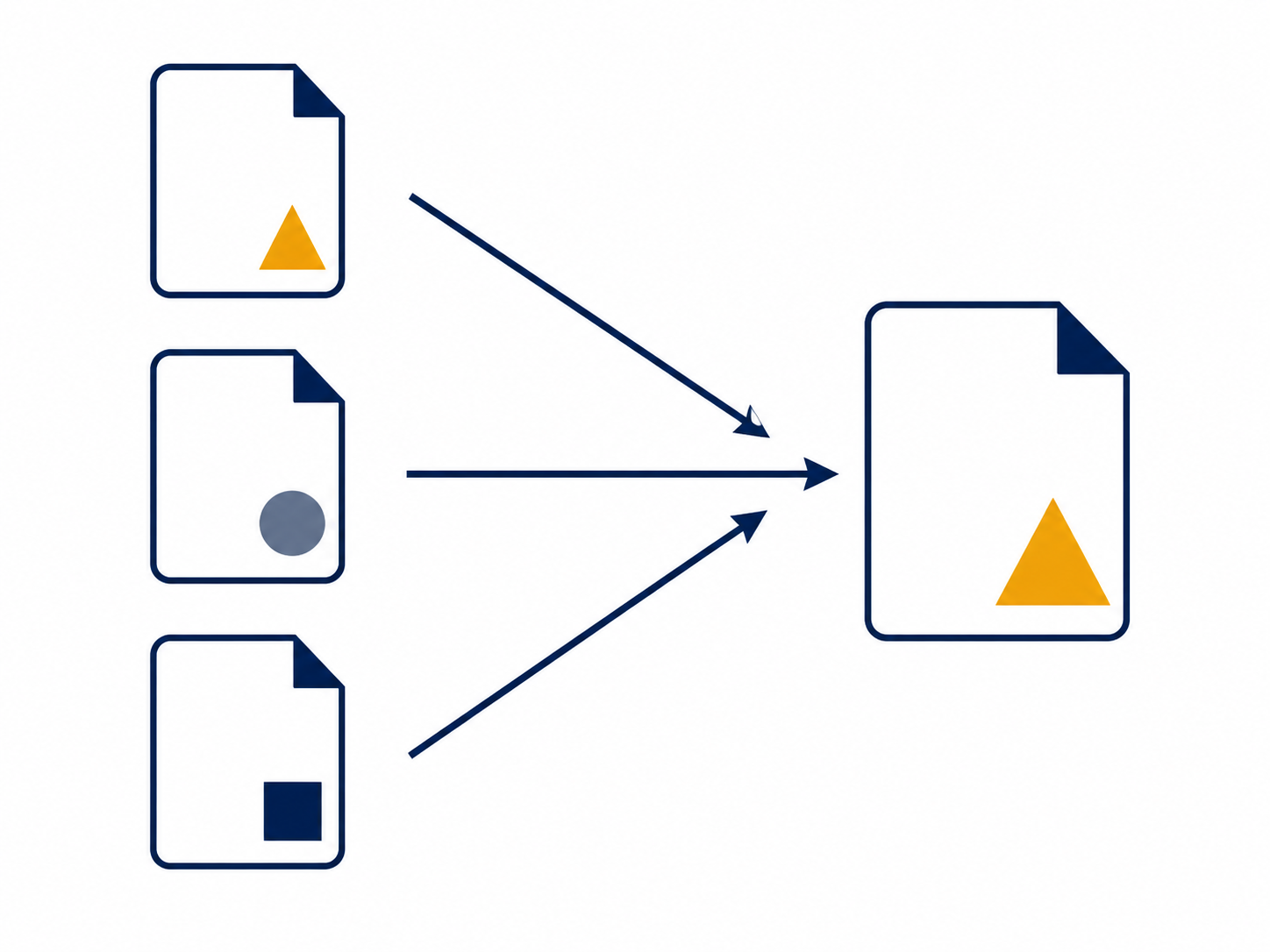
Context assembled from multiple sources inherits the most restrictive permissions of any source it includes. This is not a policy preference. It is the only safe operating principle when you cannot guarantee that a generated response will cleanly separate content from different sources.
Consider a process document that draws on three inputs: a general engineering runbook accessible to all staff, a client-specific configuration note restricted to the account team, and a security policy visible only to the security group. If an AI system retrieves and synthesizes all three to answer a question, the resulting answer carries information from a security-restricted source. The response should be treated as security-restricted. If your retrieval layer does not enforce this, it will not enforce anything meaningful.
How Permission Inheritance Breaks in Practice
The most common failure pattern is ingestion pipelines that flatten permissions. A document is ingested, chunked, and embedded with a single metadata tag, usually the source folder or the integration that pulled it. Folder-level permissions do not automatically translate into chunk-level metadata unless the pipeline is explicitly built to carry them forward. Teams discover this gap only when an audit or an incident forces them to trace exactly what a query returned and why.
A second failure pattern is permission drift. Documents get reclassified, employees change roles, and clients are offboarded. The source repository updates its permissions. The AI index does not, because nobody built a synchronization process. Six months later, a departing employee’s replacement is getting answers built on context that was restricted to the former employee’s role.
Authority Versus Draft: The Document Status Problem
Permissions are about who can see a document. Authority is about whether the document represents current, approved organizational position. These are different problems, and AI systems collapse the distinction unless you build the difference in explicitly.
A draft policy document and the approved version of that policy may live in the same folder, accessible to the same people. To a retrieval system with no document-status metadata, they are equivalent sources. An AI answering a question about policy may return content from the draft, present it with the same confidence as the ratified version, and send someone down the wrong path. In regulated environments, this is not a minor inconvenience.
The fix is straightforward in principle and tedious in practice: every document ingested into an AI context system needs an authoritative status field, and retrieval systems need to weight or filter on it. Drafts, deprecated versions, and superseded procedures should either be excluded or clearly labeled in a way that survives retrieval. This requires a document management discipline that most organizations have not applied consistently.
Ownership Per Area
Every category of context in your knowledge base should have a named owner, not a team, a person. Teams diffuse accountability. When a context owner leaves or a document goes stale, a named owner makes it obvious that something needs to happen. A team assignment means everyone assumes someone else is watching it.
Ownership has two practical functions. The first is authority: the owner decides what is in scope for AI retrieval within their area, what is excluded, and what requires a higher permission tier. The second is currency: the owner is responsible for keeping the content accurate and for triggering updates when processes change. An AI system answering questions about incident response from a procedure document that is eighteen months out of date is not a documentation problem. It is an ownership gap.
Sensitive Data Handling: What a PII Sanitizer Actually Does
Organizations preparing for AI adoption often treat PII sanitization as their primary privacy and confidentiality control. It is not. It is a defense-in-depth layer, and understanding its actual scope matters.
A PII sanitizer is designed to detect and redact personal identifiers: names, email addresses, national identification numbers, phone numbers, and similar structured data. It is good at what it was designed to do. What it does not do is detect confidential business logic, proprietary pricing models, unreleased product plans, client-specific negotiated terms, or any other form of sensitive organizational knowledge that does not match a personal-identifier pattern.
Running your documents through a PII sanitizer before ingestion reduces the risk that personal identifiers surface in AI outputs. It does not reduce the risk that confidential know-how surfaces to someone who should not have it. Those are separate risks requiring separate controls. Conflating them leaves a large gap that looks closed.
Controls That Address Confidential Know-How
The right controls for confidential organizational knowledge are the same as for any sensitive information system: explicit classification at the document level, permission enforcement at retrieval time, and audit logging of what was retrieved in response to what query. Classification has to happen before ingestion, because retrofitting it onto an existing index is expensive and error-prone.
Audit logging is worth treating as a non-negotiable requirement. When something goes wrong, you need to be able to reconstruct exactly what context was retrieved, what the query was, and what role the querying user held. Without that log, investigations are guesswork.
Tenant Isolation
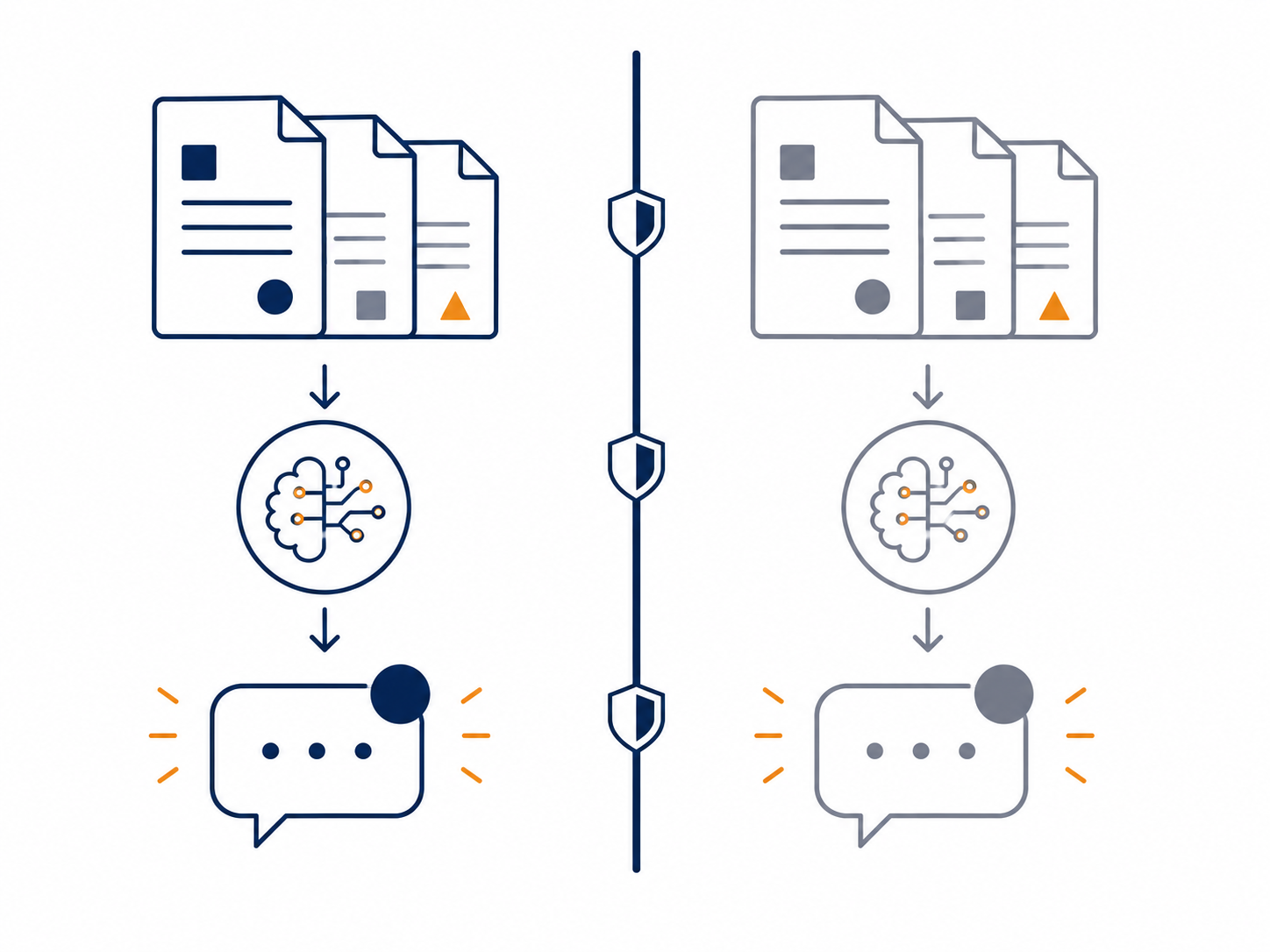
If you operate a multi-tenant environment, whether you are a SaaS provider, a managed service operator, or an internal platform serving multiple business units with separate data boundaries, tenant isolation is not optional. It is the foundational guarantee that tenant A’s context never appears in tenant B’s answers.
Tenant isolation in AI context systems requires more than separate database schemas or separate storage buckets. It requires that every retrieval query is scoped to the correct tenant before execution, that embeddings for different tenants are either stored separately or filtered by a tenant identifier that cannot be overridden by query content, and that no cross-tenant context leaks through shared caching layers or shared retrieval infrastructure.
The pressure point in practice is performance optimization. Shared retrieval infrastructure is faster and cheaper than per-tenant infrastructure. Teams make the tradeoff and then discover that their filtering logic has an edge case. The safer architectural position is isolation by default, with sharing introduced only where the isolation guarantee can be formally verified.
What Goes Wrong: Specific Failure Modes
These are not theoretical scenarios. They are patterns that emerge from organizations that build AI context systems without addressing governance first.
Confidential Document Cited to the Wrong Person
A senior manager asks the AI assistant a strategic question. The retrieval system pulls the three most semantically relevant chunks. One of those chunks comes from a board-level document that was ingested because it shared a folder with general strategy materials, and permissions were flattened at ingestion. The manager receives a response that synthesizes board-level deliberations they were never cleared to see. They did not request that document. They did not know it existed. The system surfaced it because nobody applied the permission model to the retrieval layer.
Client Data Blended Across Tenants
A support engineer at a managed services firm uses the AI knowledge base to diagnose a client issue. The retrieval system pulls context from a shared embedding index. A filtering bug, or absent filtering, means it also retrieves chunks from a different client’s incident history. The answer the engineer receives is technically coherent but mixes operational detail from two separate client environments. The engineer acts on it. The client whose data appeared in the wrong context finds out during a quarterly review.
Draft Presented as Policy
A new hire asks the AI system what the approved process is for handling a specific type of customer escalation. The system retrieves a procedure document that was drafted six weeks ago but never ratified, because it was stored in the same location as approved procedures and carried no status metadata. The new hire follows the draft process. The discrepancy surfaces when their actions are reviewed against the actual approved policy.
Building the Governance Layer Before Ingestion
The cleanest place to address these problems is before you ingest anything. Establish your classification scheme, define your permission tiers, assign document owners, and decide on your authority status model. Then build ingestion pipelines that carry all of that metadata forward and retrieval layers that enforce it. Retrofitting governance onto a running system is possible but significantly harder, because it requires re-processing existing content and re-validating every permission assignment.
The Organizational Context for AI: The Complete Guide covers the broader context foundation that this governance layer sits inside, including how to structure and maintain the knowledge your AI systems will draw on. The permission model described here only works if the underlying content is well-structured and ownership is already assigned.
One practical starting point is a content audit with security and compliance ownership on the same working group as the engineering team building the ingestion pipeline. The two groups rarely talk to each other early enough. The security team knows what is sensitive. The engineering team knows how the ingestion pipeline works. Both pieces of knowledge are required to design a retrieval system that does not leak.
The Minimum Viable Governance Checklist
- Every document has a classification tier before ingestion, not after.
- Every document has an authority status: draft, approved, deprecated, or superseded.
- Every document has a named owner responsible for currency and scope decisions.
- Ingestion pipelines carry source permissions as chunk-level metadata, not folder-level assumptions.
- Retrieval queries are scoped to the querying user’s permission tier before execution.
- Multi-tenant deployments isolate context by tenant at the retrieval layer, with filtering verified rather than assumed.
- Audit logs capture query, retrieved context, and user role for every response generated.
- PII sanitization is documented as one layer of defense, not the primary confidentiality control.
- Permission synchronization runs on a defined schedule so that source changes propagate to the retrieval index.