Post by
  June 13, 2025 |

While the tech world buzzes about AI breakthroughs in coding and content creation, there’s a massive market growing quietly in the background that deserves our attention. According to Technavio, the global noise detection and monitoring market is set to grow by $7.19 billion between 2024-2028, yet most people remain unaware of noise pollution’s devastating impact on our health and economy.
This isn’t just about annoying honking cars or late-night construction. We’re dealing with what experts now recognize as the second-largest environmental cause of health problems. That is just after air pollution, according to the World Health Organization.
The hidden costs are staggering. The economic cost of noise pollution-related health issues in the EU is estimated at over €40 billion annually. That includes healthcare and productivity losses.
The Health Crisis Hiding in Plain Sight
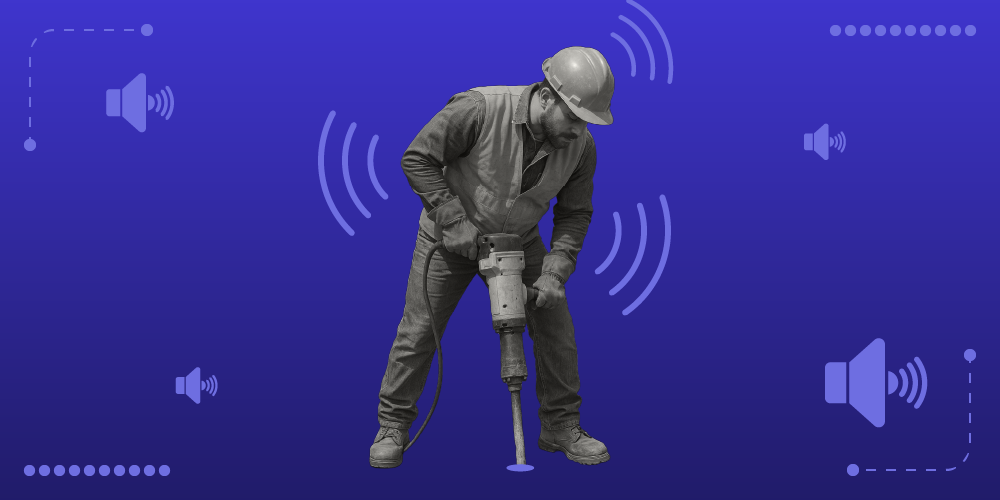
Over 100 million people worldwide are subjected to noise levels surpassing safe limits, causing far more than just temporary annoyance. Twenty percent of Europe’s population is exposed to long-term noise levels that are harmful to their health. This corresponds to more than 100 million people.
The health implications are alarming and far-reaching. The cardiovascular system bears the brunt of this assault-chronic noise exposure triggers the same stress response as physical danger. This leads to elevated cortisol and adrenaline levels, hypertension, and increased risk of heart disease and diabetes.
Sleep disruption affects urban residents, and the consequences extend beyond fatigue. Even when we think we’re “used to” noise, our brains continue processing it during sleep, leading to cognitive impairment, weakened immune systems, and mental health issues.
Children are particularly vulnerable. Studies have shown that chronic noise exposure affects academic performance, memory, and even blood pressure in young people.
How AI is Revolutionizing Noise Detection
Traditional noise monitoring systems often suffered from high false alarm rates, with early models reporting up to 75% false alarms. In contrast, modern AI-powered systems have significantly improved accuracy, reducing false alarms to less than 1%, as demonstrated by Scylla AI’s video analytics, which achieves up to 99.95% reduction in false alarms.
AI systems can account for environmental variables like weather and seasonal changes while processing audio locally to address privacy concerns – transmitting only noise classification data, never actual audio recordings.
The integration of IoT sensors, cloud computing, and machine learning has transformed noise monitoring from a reactive tool into a predictive system that can anticipate problems before they escalate.
A Market with Few Leaders but Growing Demand
Despite the massive market opportunity, the noise monitoring industry remains surprisingly fragmented, with significant room for innovation and new entrants to make their mark.
One company working to democratize this space is OTOH, a continuous sound monitoring platform designed for end users without technical acoustics expertise.
As their CEO explains, “OTOH was born from the need to democratize sound monitoring. We recognized that noise is a serious problem, yet existing technology was inaccessible to most companies and communities.“
What makes OTOH unique is its approach to privacy and accuracy. “Our AI analyzes sound patterns without recording audio, ensuring privacy and legal compliance. Additionally, we have a unique database of urban sounds, enabling us to identify noise sources within real-world city environments, significantly enhancing the accuracy of our analysis,” the CEO notes.
The market serves diverse sectors: manufacturing, oil and gas, mining, construction, and aerospace industries employ large workforces engaged in noisy tasks, while municipalities increasingly invest in smart city initiatives that include noise monitoring as a key component.
The Sound of Tomorrow
The future of noise monitoring extends far beyond measurement. We’re moving toward proactive, sound experience design, where AI doesn’t just identify problems but actively improves acoustic environments. Early experiments include AI-powered sound masking in public spaces, dynamic acoustic zoning that adjusts throughout the day, and personalized sound environments in smart buildings.
Looking ahead, OTOH plans to enhance their offering: “Starting in the second half of 2025, we will introduce AI-powered recommendation agents, providing tailored action plans based on collected data to help clients mitigate noise problems more effectively.“
The most exciting prospect is treating sound as a health indicator, similar to air quality. Imagine real estate listings that include noise scores alongside school ratings, health apps that track daily noise exposure, and cities using acoustic data to predict and prevent health crises.
As OTOH’s CEO puts it: “The biggest misconception is that noise is just a temporary inconvenience. In reality, it has serious long-term consequences for health and productivity. Noise can – and should – be managed strategically to prevent both financial and social risks.“
The companies that understand this transition from “noise as problem” to “sound as experience” will likely dominate the next phase of this burgeoning market. With a CAGR of 6.85% during the forecast period, the noise monitoring industry represents a significant opportunity to improve public health while building sustainable businesses.
The World is Finally Listening
Noise is no longer just an urban inconvenience – it’s becoming a recognized health and environmental issue. Forward-thinking countries are taking action, and technology is stepping up to meet the moment.
In Singapore, a city-wide smart monitoring system is already adjusting noise levels in real time. It shows the world that intelligent sound management is not a dream of the future – it’s happening now. Across Europe, the Environmental Noise Directive is laying the groundwork for standardized noise mapping, unlocking cross-border opportunities for innovation.
This rising global awareness, paired with regulatory momentum, is creating fertile ground for the next generation of AI-powered noise monitoring.
Smart cities need smart sound solutions – and the market is ready.