Post by
  August 25, 2026 |

Organizational context is the body of knowledge an AI system reads from when it acts on behalf of your organization. It includes your decisions, your processes, your domain expertise, your access rules, and the policies that govern all of the above. Without it, an AI system does not become more intelligent when you connect it to your workflows. It becomes a fluent paraphraser of whatever fragments it can find, filling gaps with plausible-sounding invention. This article defines what organizational context actually means, introduces the four tests any piece of knowledge must pass to count as usable context, and explains the readable-organization idea that frames everything that follows.
If you want the full architectural treatment, the hub guide Organizational Context for AI: The Complete Guide covers the three layers in depth and ties the whole model together. This article is the foundation that makes the rest of that material make sense.
What organizational context actually means
Context, in everyday use, means the surrounding information that makes a statement interpretable. In engineering, context means something more specific: the inputs that constrain what a system should produce. Organizational context for AI is both. It is the structured, governed body of knowledge that tells an AI system what your organization does, how it does it, who is authorized to know what, and what the current state of everything actually is.
That definition rules out a lot of things teams assume count as context. A Confluence space full of outdated runbooks is not context. A Google Drive folder where no one can find anything is not context. A collection of Slack messages reconstructing a decision that was never formally documented is not context. These are raw materials. They become context only when they pass four specific tests.
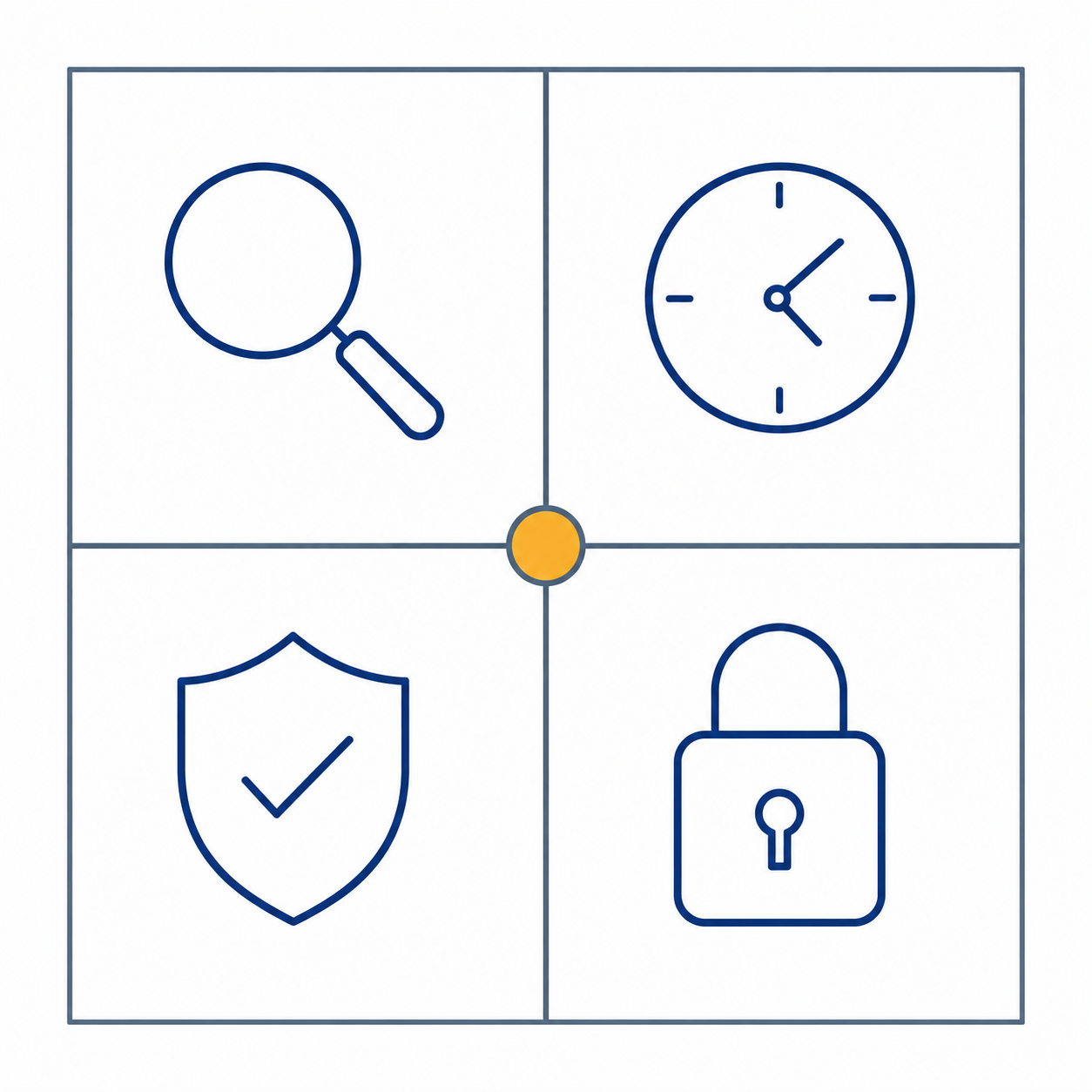
The four tests: findable, current, authoritative, governed
These are not aspirational qualities. They are functional requirements. If a piece of knowledge fails any one of them, it cannot serve as reliable context for an AI system.
Findable
An AI system retrieves knowledge through search, through structured access, or through direct injection into a prompt. If your knowledge is not retrievable by the mechanism the system uses, it does not exist from the system’s perspective. Findability is not just about search indexes. It is about structure: consistent naming, meaningful metadata, predictable location. Knowledge buried three levels deep in a folder named ‘Archive 2022’ is not findable in any meaningful sense.
Current
Stale knowledge is worse than no knowledge in many failure scenarios. No knowledge triggers an ‘I don’t know’ response. Stale knowledge triggers a confident wrong answer. Your deployment process from fourteen months ago, your pricing logic from before the last product revision, your incident response procedure before the infrastructure migration: if these are still indexed and retrievable, an AI will use them. Currency means there is a maintenance process that catches and updates knowledge when the underlying reality changes.
Authoritative
When two documents say different things, a human with organizational knowledge can usually tell which one to trust. An AI system cannot, unless you have established authoritativeness through structure. Authoritative means one source is designated as the canonical version for a given topic, and that designation is enforced, not just intended. Duplicate, conflicting, or unattributed knowledge undermines every downstream output.
Governed
Governance means controlled access, clear ownership, and a defined lifecycle. Governed knowledge has an owner who is responsible for its accuracy. It has access rules that reflect who should be able to read or act on it. It has a defined review cadence. Without governance, you cannot maintain the other three properties at scale, and you cannot make safety claims about what the AI is reading from.
The readable-organization idea
Here is the mental model that changes how teams think about AI adoption. An AI system does not think for your organization. It reads from your organization and generates outputs based on what it reads. The quality of those outputs is directly constrained by the quality of what is available to read.
A readable organization is one where that reading process is reliable. The knowledge is structured so a system can retrieve the right piece for the right question. It is current, so what the system reads reflects actual operational reality. It is governed, so the system is not reading things it should not, and the people responsible for the knowledge know when it is being used.
The work of preparing for AI is therefore the work of making your organization readable. This is not glamorous work. It involves deciding what counts as authoritative documentation for a given process, cleaning up the retrieval surface, assigning owners, and building the refresh habits that keep knowledge current. Teams that skip this work and connect AI directly to their existing knowledge base are not taking a shortcut. They are building on a foundation that will fail them.
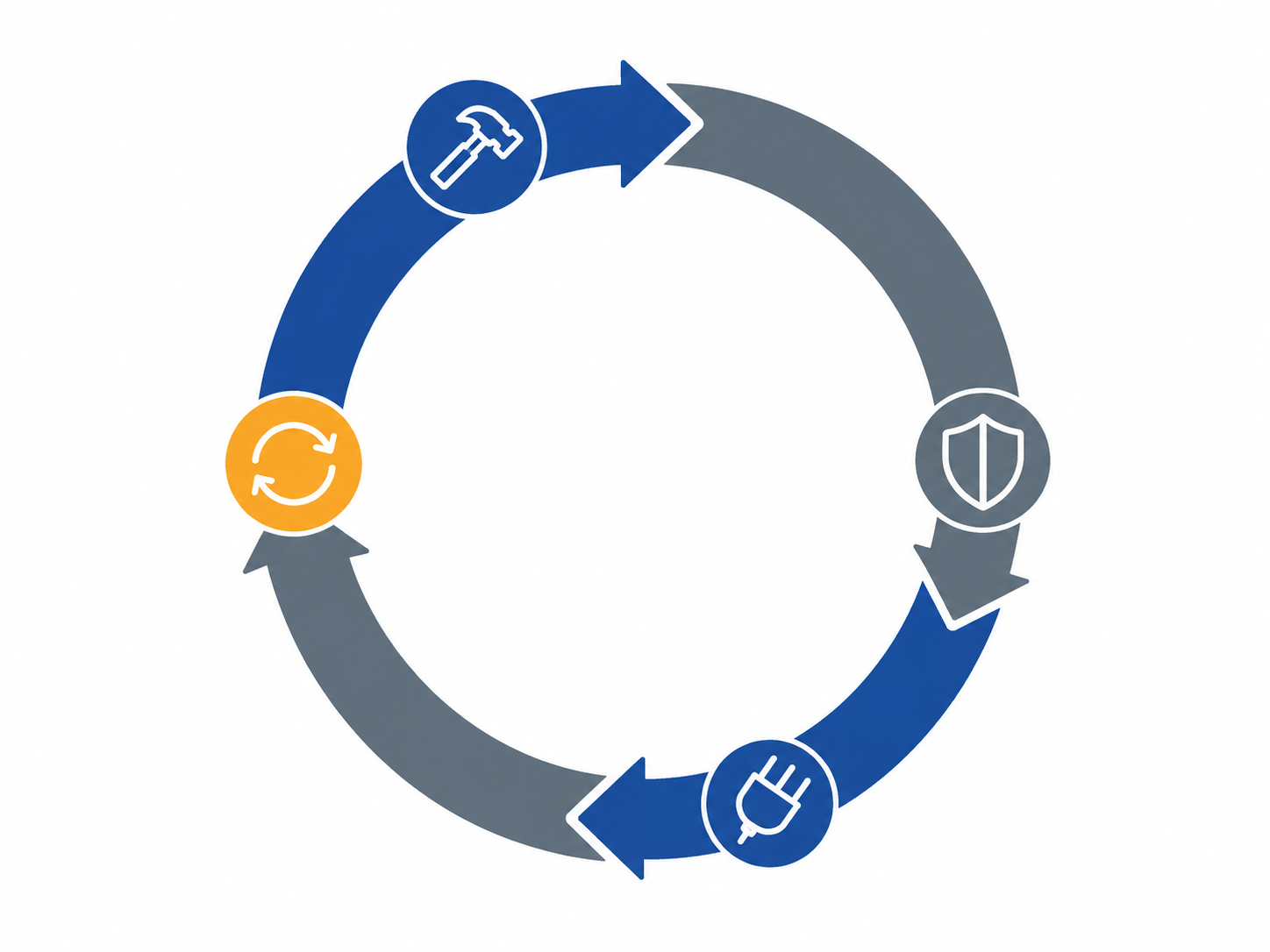
The build-govern-plug-refresh loop
There is a repeating operational cycle that applies at every layer of an organization’s context infrastructure. Understanding it early prevents the common mistake of treating context as a one-time setup task.
- Build: create or migrate the knowledge into a form that passes the four tests. This means structuring it, tagging it, designating authority, and placing it somewhere retrievable.
- Govern: establish ownership, access rules, and a review process before connecting any AI system. Governance that is bolted on after the fact is consistently weaker than governance built in from the start.
- Plug: connect the governed knowledge layer to the AI system. This is the step most teams do first. It should be the third step.
- Refresh: treat knowledge currency as an ongoing operational responsibility, not a project deliverable. The loop closes here and restarts. Reality changes. Processes evolve. Refresh is what keeps the readable organization readable over time.
The loop applies at three layers of organizational knowledge, which the hub guide covers in full. At a high level: operational knowledge (how your organization runs day to day), domain knowledge (the expertise your organization holds about its field), and decision knowledge (the reasoning and policy record behind significant choices). Each layer has different currency requirements, different ownership patterns, and different access governance needs.
What goes wrong when you skip this
The failure modes from connecting AI to an unreadable organization are specific and worth naming. Understanding them before you build is more useful than diagnosing them after the fact.
Fluent but generic answers
When the AI cannot find specific organizational knowledge, it falls back on general training. Ask it about your deployment process and it will describe a plausible deployment process, just not yours. This failure mode is dangerous because the output looks useful. It uses the right vocabulary, it follows a logical structure, and it reads as confident. The person reading it may not know enough to catch what is missing.
Subtly wrong answers from stale context
This is the failure mode that causes the most damage in practice. The AI retrieves real organizational knowledge, but it is from a document that has not been updated since the process it describes changed. The answer is grounded and specific. It is also wrong in ways that are not obvious on the surface. A team member following AI-generated instructions based on a deprecated runbook can spend hours troubleshooting before realizing the procedure itself no longer applies.
Confident fabrication where knowledge has gaps
Gaps in organizational knowledge do not produce silence. They produce synthesis. The system combines adjacent knowledge to fill the gap and presents the result with the same confidence as a retrieval. If your architecture decision records are missing the rationale for a key infrastructure choice, and someone asks the AI why that choice was made, they will get an answer. It will sound reasonable. It will be invented.
Access boundary failures
Without governed access control on the knowledge layer, the AI system reads everything it can reach. In a retrieval setup without proper access rules, a user querying about their project might surface context from a different team, a different client, or a confidential process they have no business seeing. The AI is not making an access decision. It is retrieving what is available. If availability is not governed, the system has no access boundary.
Blame lands on the model
The organizational consequence of these failures is predictable: the team concludes the AI is not good enough for production use, runs a benchmark against a different model, and cycles through vendors without improving outcomes. The model is rarely the root cause. The root cause is that the organization was not readable, and no model can compensate for that.
Where the work actually starts
The starting point is an honest assessment of what your organization’s knowledge actually looks like right now. Not what the wiki is supposed to contain. What it does contain, how current it is, who owns what, and whether any of it passes the four tests in its current state. For most technical organizations that have been operating for more than a year or two, the answer is that significant portions of operational and decision knowledge exist informally, in people’s heads, in channel histories, or in documents that are no longer maintained.
That is not a criticism. It is a normal state for an organization that has been moving fast. The problem arises when teams assume that state is good enough to build AI systems on top of. It is not. The readable-organization work comes before the AI connection, not after it.